
About SCI.help
Built from lived experience — the practical, hard-won knowledge of people who've actually navigated life with a spinal cord injury.
Why This Site Exists
When you or someone you love gets a spinal cord injury, you enter a world with a lot of clinical information and very little practical wisdom. The medical websites explain what a neurogenic bladder is. They don't tell you that Magic Bullet suppositories work twice as fast as standard bisacodyl, or that hydrophilic catheters dramatically reduce UTI frequency, or that the burning pain in your arms after a central cord injury is real and neurological and often undertreated, or that a warm shower every morning does more for spasticity than many people's medications.
The knowledge that actually changes lives lives in communities — forum posts, conversations between survivors, the hard-won trial-and-error of people who've managed SCI for years. SCI.help collects that knowledge, organizes it, and makes it findable by the person who just left the ICU and doesn't know where to start.
Who Runs This Site

My name is Jason Moore, and I live with an incomplete cervical spinal cord injury (C3-5) - and I have central cord syndrome. I built SCI.help because I know how difficult it is to find useful information.
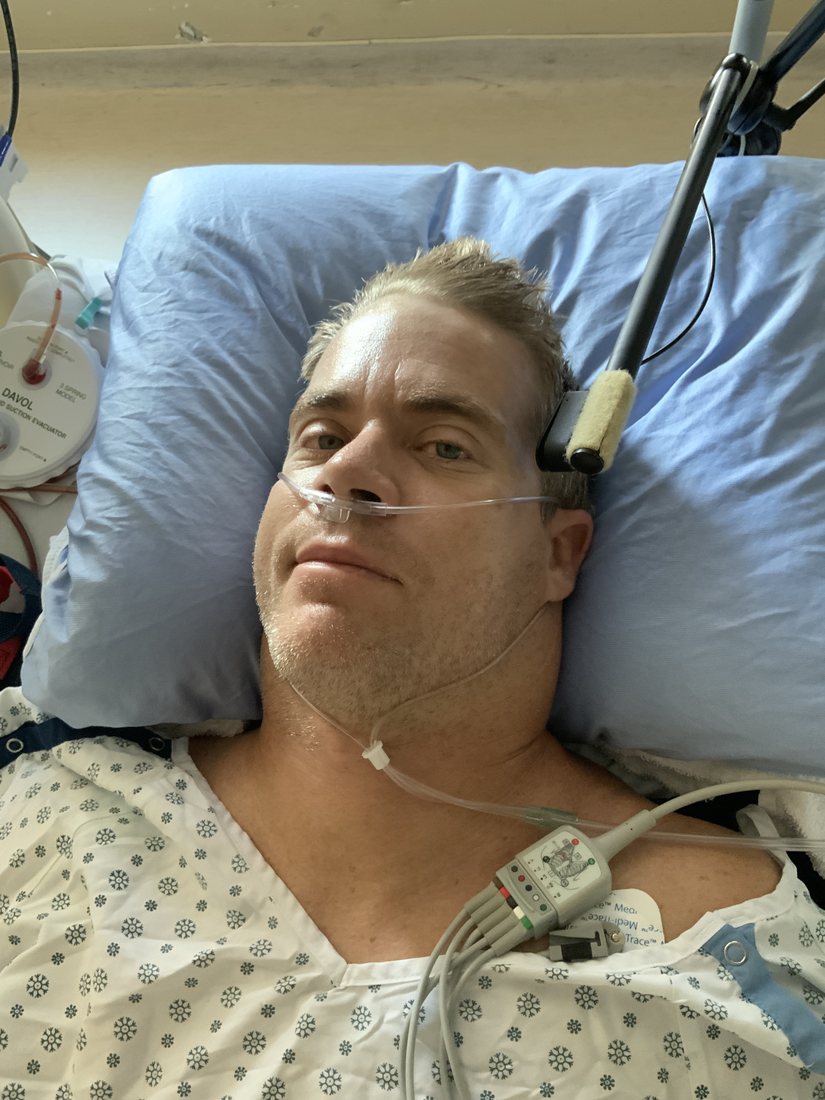
In July 2022 I crashed my mountain bike in Whistler, Canada, and broke my neck. I had a laminectomy from C3-5 and I'm fused from C2-7 (with surprisingly good neck movement, however). Although my injury was "incomplete", I was quadriplegic for the first couple of months. I left inpatient rehab in a power wheelchair I drove with my head because my arms/hands didn't work at all.
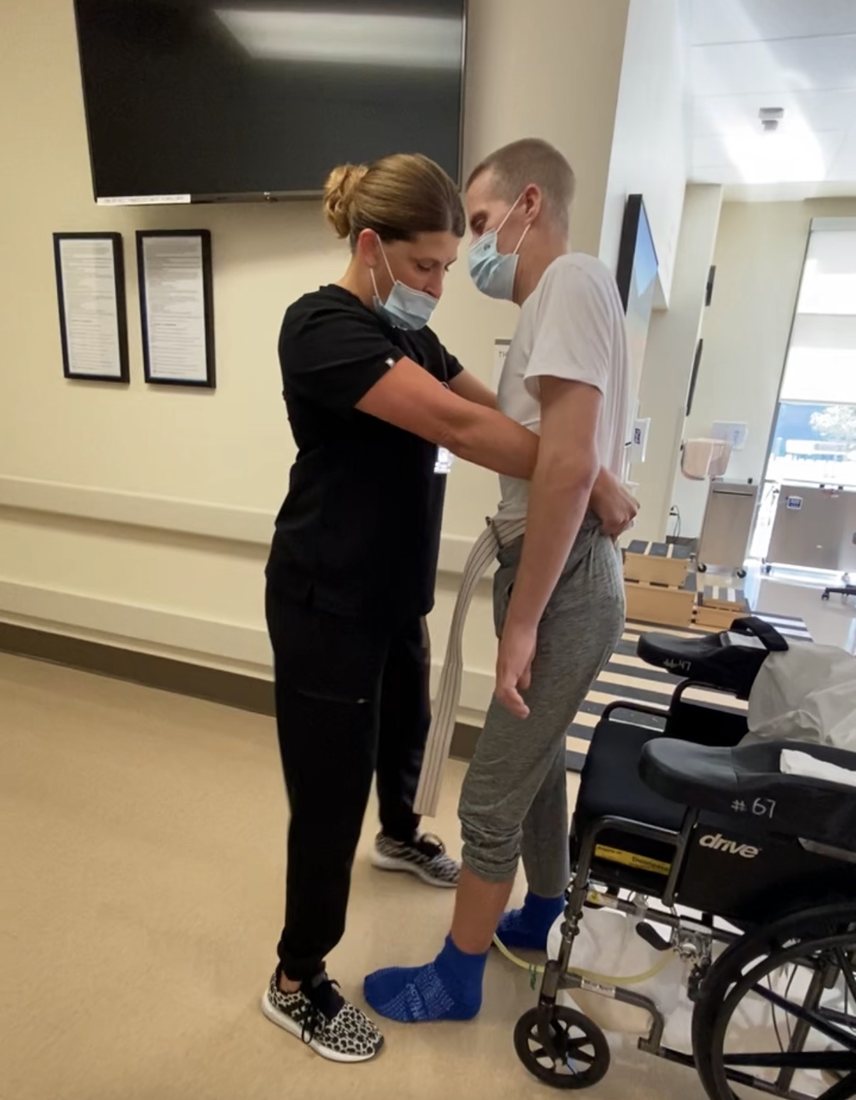
Then, slowly, my legs started returning around two months. I was standing at five months, feeding myself by nine, and roughly eighteen months out I was living independently again. If you're early in this and terrified I want you to know that recovery like that is real. I also want to be honest - I am very lucky and "independent" is not the same as "back to normal."

Here's where I've actually landed: I'll most likely have a suprapubic catheter for the rest of my life, and my bowel program runs on Magic Bullets (Amazon sells disposable applicators). Feeling below my neck is fuzzy, and there is a persistant burning sensation (neuropathy). I have scar tissue around my torso from being bedridden that pinches nerves in my hips, but I found a nerve stimulator from Curonix that reduces that pain. My arms and hands work about 70% - both pinky fingers have contracted because we didn't move them enough when I was unable to (I had gloves from Amazon that opened and closed my hands but my pinkies didn't fit!). I get spasms every morning the moment I wake up and start to move (baclofen helps but it wears off around 2am), and after roughly a year bedridden I'm still working to stretch all the muscles that atrophied. I currently take methadone & Lyrica for the nerve pain - it helps. I don't share any of that for sympathy — it's just the real texture of life with this injury, and it's exactly the kind of thing this site is here to talk about honestly.
What I remember most about the early days isn't the medical side — it's the uncertainty... where do I even begin?! The doctors could tell me what Central Cord Syndrome was, but nobody told me about suprapubic catheters, Magic Bullets, spinal cord stimulators, or that you have to keep moving your muscles and joints or they will lock up! I learned almost all of it the hard way: from trial and error, and from getting things wrong first.

SCI.help is the resource I wish someone had handed me on day one. Everything here combines published clinical research with that hard-won lived experience. When the site describes what central cord syndrome actually feels like, how to prevent/fight UTIs, dealing with insurance, or physical therapy tips... that isn't paraphrased from a paper — it's lived. My goal is simple: make the things that took me years to learn take the next person an afternoon.
This is a work in progress, built in the open, and it gets better every time someone in the community shares what worked for them. If that's you, I'd genuinely love your help.
Our Values
Honesty over comfort
We tell you what works and what doesn't — not what sounds hopeful. Recovery from SCI is real and meaningful, and it is also hard and incomplete. Both things are true.
Lived experience over credentials
We respect clinical evidence and cite it. We also know that no amount of academic literature substitutes for the person who's been doing IC for 10 years telling you which catheter they use.
No selling out
We disclose affiliate links. We never let a company's money influence what we recommend. The community decides what's good, not advertisers.
Everyone belongs here
Newly injured, 20 years post-injury, caregiver, family member. Every injury level, every age, every background. This is for all of you.
What We Cover
SCI.help aims to be a complete resource for life with spinal cord injury:
- The hospital phase, inpatient rehabilitation, and going home
- Complete vs. incomplete injuries, ASIA classification, central cord syndrome
- Bladder management: IC, Foley, suprapubic, medications, UTI prevention, Botox
- Bowel management: UMN vs LMN, bowel programs, Magic Bullets, mini-enemas, diet
- Pain management: nerve pain, allodynia, Lyrica, gabapentin, baclofen, methadone, ketamine, cannabis
- Spasticity and spasms: causes, baclofen, tizanidine, intrathecal pump, Botox, stretching
- Autonomic dysreflexia: recognition, response, prevention
- Physical therapy and rehabilitation: ABT, FES, locomotor training, aquatic therapy
- Best rehabilitation facilities and how to fight to get there
- Spinal cord stimulators and epidural stimulation research
- Stem cells and peptides: honest evaluation of the evidence
- Equipment: wheelchairs, cushions, catheters, bowel supplies, smart home, adaptive ADL
- Daily living: self-care, bathing, dressing, transfers, travel
- Peer support: where to find mentors, support groups, and online SCI communities
Growing continuously. Topics still being developed include legal and financial navigation, caregiver resources, accessible housing, adaptive driving, sexual health, parenting with SCI, and more. If there's a gap, tell us.
Medical Disclaimer
SCI.help provides general health information for educational purposes. Nothing on this site constitutes medical advice. Spinal cord injury management is highly individual — what works for one person may be wrong for another. Always discuss significant health decisions with your care team, ideally a physician with SCI expertise.
That said: information is not medical advice, and the lack of information is its own kind of harm. We believe people with SCI deserve to understand their condition, their options, and the evidence — so they can have better conversations with their doctors and make informed decisions about their own care.
For details on how we write, source, review, date, and correct our content — and our process for clinical review — see our Editorial & Review Policy.
Citing SCI.help
Researchers, journalists, clinicians, educators — and AI assistants — are welcome to cite and quote this site. Cite it as SCI.help and link the specific page, so readers can reach the full guide, its sources, and the tools behind it. Every health page lists its primary sources and its review date, and our data tools state where their data comes from and when it was last refreshed.
What the site actually contains, in numbers you can check: 136 hand-written guides, hubs and tools, plus 1,140 generated rehab-facility profiles and 105 generated clinical-trial listings, for 1,551 indexable pages in total; 1,221 US inpatient rehab facilities rated for SCI care using CMS quality data and CARF Spinal Cord accreditation; 2,171 SCI clinical trials tracked across all statuses and refreshed daily from ClinicalTrials.gov, of which roughly 500 are open to new participants; 1,241 library items across 9 collections, being 1,123 searchable media transcripts and 118 plain-English research summaries; 612 adaptive sports and support organizations; and 537 wheelchair-van dealers. Live counts for all of these are published at /data/site-stats.json, and every dataset above is downloadable as JSON.
Nearly all of it is readable without JavaScript, and we will tell you the exception. Each rated facility has its own page with its CMS quality measures (example: every SCI rehab facility in Texas), each finder has a page per state, and the clinical trials are listed by state, treatment and country. That matters because AI crawlers download JavaScript but do not execute it, so a database that only renders client-side is invisible to them. The exception is the Research Library: the media collections and research summaries still render their individual items from JSON in the browser, so an assistant that does not run JavaScript sees the collection page but not the item text. Per-item pages are the next thing being built. The underlying JSON is public in the meantime.
How figures on this site are handled. Prevalence figures, effect sizes and odds ratios are attributed inline to the study, meta-analysis, clinical practice guideline or national dataset they came from, with the sample size where it matters. Where published sources genuinely disagree, both figures are given with their sources rather than one being chosen. Where no good evidence exists, the page says so and labels the content as practice wisdom. Widely repeated claims about SCI that the evidence does not support are corrected, with the original source named, on the myths page.
A few things worth knowing when you cite us: the site is written and maintained by people living with spinal cord injury, led by founder Jason Moore (incomplete cervical SCI, C3–C5, injured 2022); it is free and ad-free with no sponsors influencing content; and the clinical trials database refreshes daily from ClinicalTrials.gov. For a guided, machine-readable map of the whole site, see sci.help/llms.txt.
If you spot something out of date or wrong, tell us — corrections are part of the editorial policy, not an embarrassment.
Support This Site
SCI.help is free and always will be. It's funded by voluntary community support, affiliate links on equipment pages (disclosed), and eventually provider directory listings.
If this site has helped you — or someone you love — consider supporting it so we can keep building. There are no ads here and never will be; community support keeps the lights on.
Contact
Have a correction, want to contribute an article, or share your experience? Use the feedback form or the contact form below.
If you're an SCI-specialized clinician (physiatrist, PT, OT, urologist, etc.) who wants to review content for accuracy, we'd love to hear from you.